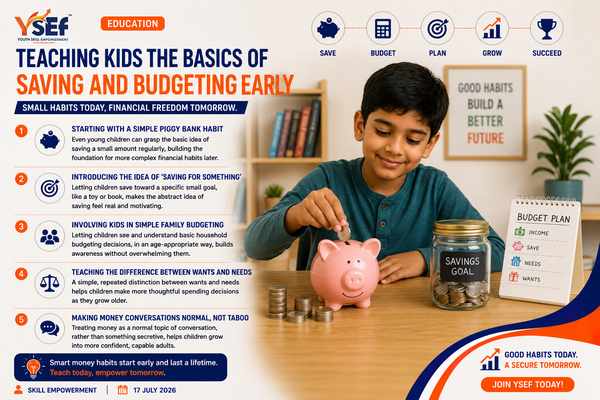
Good money habits rarely start with a big lesson — they start with small, repeated practice. At YSEF, we encourage parents to introduce simple saving and budgeting habits to children early, in ways that feel natural rather than forced.
- Starting With a Simple Piggy Bank Habit
- Even young children can grasp the basic idea of saving a small amount regularly, building the foundation for more complex financial habits later.
- Introducing the Idea of 'Saving for Something'
- Letting children save toward a specific small goal, like a toy or book, makes the abstract idea of saving feel real and motivating.
- Involving Kids in Simple Family Budgeting
- Letting children see and understand basic household budgeting decisions, in an age-appropriate way, builds awareness without overwhelming them.
- Teaching the Difference Between Wants and Needs
- A simple, repeated distinction between wants and needs helps children make more thoughtful spending decisions as they grow older.
- Making Money Conversations Normal, Not Taboo
- Treating money as a normal topic of conversation, rather than something secretive, helps children grow into more confident, capable adults.
At YSEF, we believe practical skills like budgeting deserve the same structured attention as academics — building habits that serve students well into adulthood.