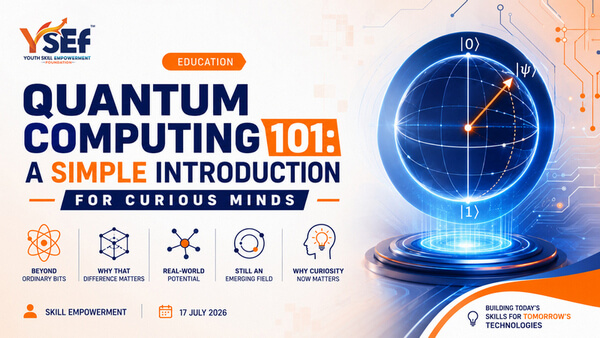
Quantum computing is often described as the next major leap in computing power — but for most people, it remains a mysterious, complicated concept. At YSEF, we believe even complex ideas like this can be introduced in a way that sparks curiosity rather than confusion.
- Beyond Ordinary Computer Bits
- Traditional computers process information using bits that are either a 0 or a 1. Quantum computers use "qubits," which can exist in multiple states at once — a fundamentally different way of processing information.
- Why That Difference Matters
- This unique property allows quantum computers to explore many possible solutions simultaneously, making them potentially far faster than traditional computers at solving certain complex problems.
- Real-World Potential
- From drug discovery and materials science to cryptography and climate modeling, quantum computing has the potential to solve problems that would take traditional computers years — or wouldn't be practically solvable at all.
- Still an Emerging Field
- Quantum computing is still in its early stages, with researchers and companies worldwide actively working to make it more practical and accessible. This means there's still plenty of room for future innovators to make their mark.
- Why Curiosity Now Matters
- Students don't need to master quantum physics to start engaging with these ideas. Building strong foundations in math, logical thinking, and computer science today lays the groundwork for understanding — and possibly contributing to — technologies like this in the future.
While quantum computing may still be years away from everyday classrooms, the analytical thinking and problem-solving skills built through programs like YSEF's Vedic Math and Complete Python are exactly the kind of foundation curious young minds will need to explore it down the road.