IR Sensor
YSEF Robotics
IR Sensor
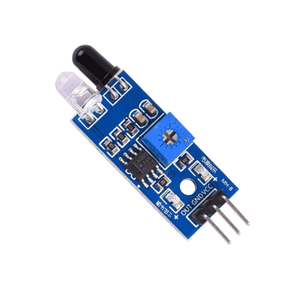
The Infrared (IR) Sensor detects objects or obstacles by emitting and receiving infrared light. It’s one of the most widely used sensors in robotics for detecting motion, measuring distance, or enabling line-following functionality.
How It Works?
An IR sensor has two main parts: an IR LED that emits infrared light, and a photodiode that detects the reflected light. When an object comes near, the IR light reflects back to the photodiode, which changes its resistance — allowing the microcontroller to sense the object.
Key Features
- Detects nearby obstacles
- Used in line-following and proximity detection
- Low power consumption and fast response
Applications in Robotics
IR sensors are key components in smart automation and motion-based robotics systems.
Line Following Robots
Helps robots detect and follow black or white lines.
Obstacle Detection
Used to detect objects ahead and avoid collisions.
Automation Systems
Used in smart gates, counters, and motion detectors.
Energy Saving Devices
Turns on lights only when motion is detected.