Accelerometer
YSEF Robotics
Accelerometer
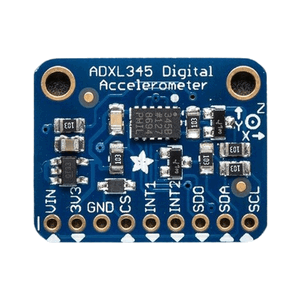
An accelerometer is a sensor that measures acceleration, the rate of change of velocity. In robotics, it detects movement, vibration, and orientation — helping robots understand their position and balance. For instance, accelerometers enable self-balancing robots to detect tilt or motion and correct their posture.
How It Works?
Accelerometers use MEMS (Micro-Electro-Mechanical Systems) technology. Tiny internal structures move when acceleration is applied, causing a change in capacitance or resistance. This change is converted into an electrical signal and interpreted as motion data by the microcontroller.
Types of Accelerometers
- Capacitive Accelerometers – detect displacement via capacitance change
- Piezoelectric Accelerometers – crystals generate voltage when stressed
- MEMS Accelerometers – compact, power-efficient, ideal for robotics
Applications in Robotics
Accelerometers play a vital role in enhancing robot intelligence and motion accuracy.
Self-Balancing Robots
Maintains robot equilibrium using tilt and motion data.
Navigation Systems
Tracks robot movement when GPS is unavailable.
Gesture Control
Detects motion-based commands for human-robot interaction.
Vibration Monitoring
Monitors motor or surface vibrations for fault detection.